Web of Growth

Group design project
Project date: Sep 2024 – Jan 2025

Laser-engraved wooden Web of Growth box in front of a green Web of Growth logo

Challenge-Based Learning (CBL) is a cornerstone of the TU/e curriculum, enabling students to tackle real-world challenges while developing essential 21st-century skills. Through identifying their own learning needs, setting goals, searching resources and tracking their progress, students develop the self-learning skills necessary for lifelong learning and addressing future challenges with initiative.

However, this journey is not as smooth as it sounds! Have you ever felt overwhelmed trying to set learning goals and achieve them in a group project?

Web of Growth is a playful and open-ended toolkit designed to empower students at TU/e to navigate this process with confidence. By following the guide from a workshop or manual, students use the toolkit step by step: they begin by selecting archetypes that align with their current CBL project, then identify the skills they wish to develop. Next, they choose specific activities to practice these skills throughout the design process.

Furthermore, through group discussion, students align their individual goals and develop strategies for effective team collaboration. With Web of Growth (WoG), students transform the challenges of goal-setting into an engaging and tangible experience.

Research

Theoretical background
and related works
Design brief
Goal settingPlayful learningAutonomy
Challenge-based learning21st-century skills
Ownership of their own learning
Self-directed learners

How can a playful learning tool be designed to
effectively facilitate setting learning goals for
Challenge Based Learning projects?

GroowTU/e innovation space CBL wheel of life
University Twente CBL ToolkitTerra Nova
Two user workshops with 2nd year
bachelor students & expert talks
Primary research
Connect individual goals to a group’s setting
Effective goal settingStay motivated
Diverse level of support
Set relevant learning goals in limited time frame
Stay on track in the process

How to make the mental process of identifying
and formulating learning goals more tangible?

Use scaffolding method to support students in
goal setting

Design exploration

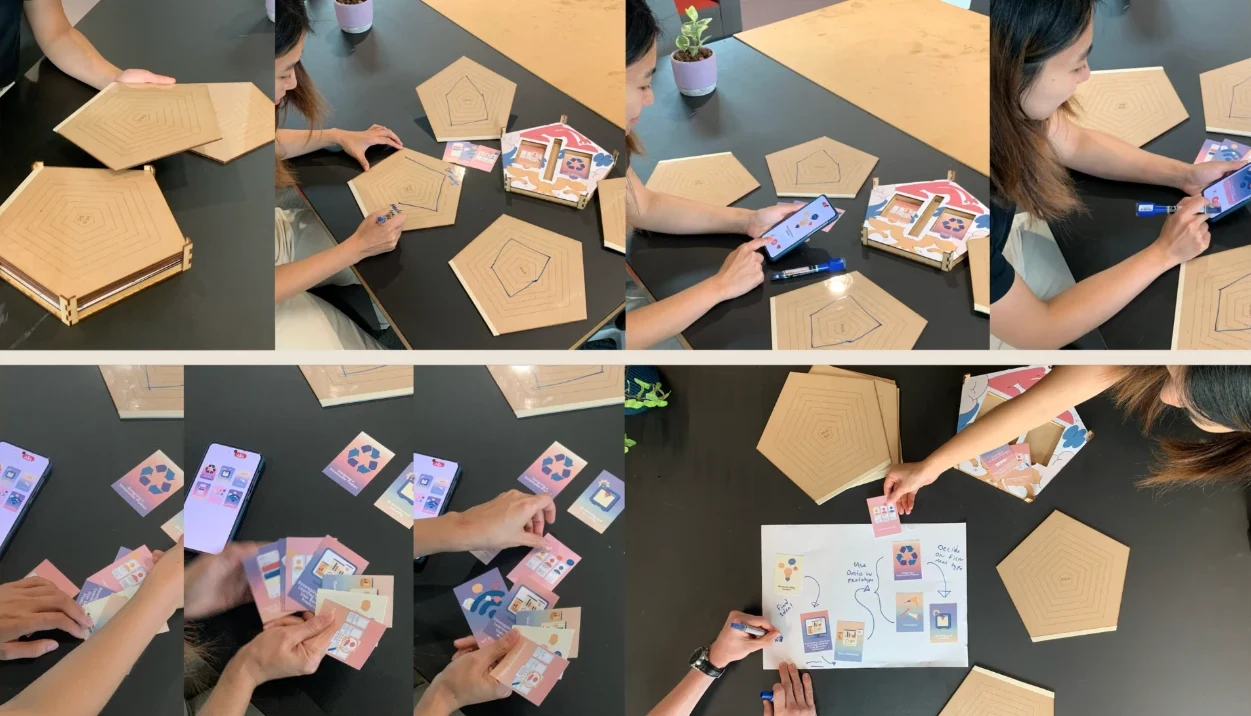
Collage of early prototypes: pentagon-shaped wooden self-assessment boards, illustrated cards and a phone app being tested on a table
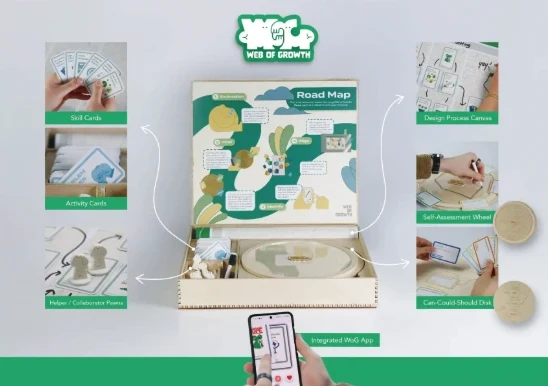
Overview of the final toolkit: skill and activity cards, helper pawns, road map box, design process canvas, self-assessment wheel, can-could-should disk and the integrated app

Final design

The final design consists of activity and skill card decks, a double-sided disk featuring a self-assessment wheel and a can-could-should disk, helper and collaborator pawns, a design process canvas, and an integrated app. WoG aims to guide students in goal-setting, while still maintaining open-ended, empowering them to take ownership of their learning process in line with CBL and DBL principles. Students decide how many activity cards to select and place, based on their preferences. Additionally, teams have the flexibility to define the phases on the DPC themselves according to design phases, deadlines, or other project milestones.